Thursday, January 30, 2014

What good comes from Christian missions?


Back in 2003, as we were preparing to leave our home in the United States behind and move to Mozambique, our conversations with strangers often took on a familiar pattern.

“Oh, you’re moving to Africa?” they’d ask, “Have you read The Poisonwood Bible by Barbara Kingsolver?”

“Yes, we have,” Rachel and I would say through clenched teeth.  “It’s a good read… but, it’s also a pretty extreme example of what a bad missionary looks like.  We hope to work in a way that will really serve and bless the Makua people.”

Now, we understood why people would bring up that novel.  They’re thinking, “Oh you’re going to do X… well, I’ve read a book about X.”  But, in our minds that’s kind of like saying, “Oh, you want to work in government… have you read this book about Richard Nixon?”

And that’s why it seemed so natural to me that Andrea Dilley’s recent article on the long-term impact of Christian missions also begins with The Poisonwood Bible.   Dilley summarizes and digests a fascinating study by Robert D. Woodberry in the American Political Science Review called, “The Missionary Roots of Liberal Democracy.”  Both the Christianity Today article and the primary source are worth reading.

Dilley’s main finding was this: “In short: Want a blossoming democracy today? The solution is simple—if you have a time machine: Send a 19th-century missionary.”

She goes on to say that, “Areas where Protestant missionaries had a significant presence in the past are on average more economically developed today, with comparatively better health, lower infant mortality, lower corruption, greater literacy, higher educational attainment (especially for women), and more robust membership in nongovernmental associations.”  So, Woodberry's results suggest “that 50 years' worth of research on the rise of democracy had overlooked the most important factor.”

Wow!

Now, Woodberry is very careful in his research to not equate correlation with causality.  Just because A and B are found in the same place, that doesn’t mean that A caused B.  His article is an interesting combination of statistical and historical analysis.  But he makes a great case for the foundational role of missions in forming a better society.

One important nuance to his study, though, was that, “The positive effect of missionaries on democracy applies only to ‘conversionary Protestants.’ Protestant clergy financed by the state, as well as Catholic missionaries prior to the 1960s, had no comparable effect in the areas where they worked.”  It seems that the independence that those 19th Century Protestant missionaries had from state control allowed them to be critical of colonialism (a surprise divergence from the perception more commonly held today).  Woodberry finds that these missions were “crucial catalyst(s) initiating the development and spread of religious liberty, mass education, mass printing, newspapers, voluntary association, and colonial reforms, thereby creating the conditions that made stable democracy more likely” (Woodberry 2012, 244).

Dilley shares a handful of (mostly) forgotten examples.  There’s the Harris family, Baptists who documented and publicized the injustices of the rubber industry in the Congo.  Trevor Huddleston, an Anglican who critiqued the policies of Apartheid and help turn global opinion against it.  There’s James Long, who was jailed for standing up for the rights of the people he served.  And there are countless others.

I don’t think that any of those missionaries, as they boarded ships headed for foreign fields, had any idea of the scope of their impact.  There was no way for them to know that their work would have blessed the people and their countries in this way.

In Scripture, the story of Abraham in Genesis 12 is the primary text for understanding God’s vision for the mission of his people.  God tells Abraham that he has been blessed to be a blessing and then through that one faithful, old man God would bless all the peoples of the world.  That divine promise of blessing continues to be lived out through Father Abraham’s children up until today.

So, basically… according to all that historical and statistical analysis… with some exceptions… those 19th century missionaries rocked!

Collectively they took on gigantic tasks like mass education, printing, health care and more and their work had a lasting impact.  Besides their impact on the other side of eternity, we should also recognize that they were some of the first people to champion for what we now consider to be ‘basic human rights’ and their influence shaped the nations they served way beyond their own lifetimes.

Now, that being said, the world looks pretty different now than it did then.  These days almost all governments and non-governmental organizations have at least nominally adopted those 19th century missionary emphases of education and advocacy into their own platforms.  So, here’s my question:

What are the issues that missionaries are (or should be) responding to today that could have that same kind of long term impact here on earth?

Let me humbly offer a few guesses/suggestions for how missions today can be a blessing to host countries in ways that will bear fruit in the next century.  (Admittedly, none of these are ideas are new to me, they’re similar to ones thrown around in conversations about the next frontier of missions…  Though, maybe now we should recognize that that new frontier is already here!)

  1. Be advocates for the local church.  Missionaries serving in both ‘open’ and ‘closed’ countries must do a better job of working in partnership with existing church structures.  The age of colonialism is over, so it is essential to remember one's status as as a guest and make sure that local believers are full participants in setting the agenda both inside and outside the church.   
  2. Serve as connectors for the global Church.  In our hyper-connected world, long-term missionaries can provide a real personal connection between buyers and sellers, friends and enemies, Christians and Muslims, etc. who share this global community.
  3. Work towards making disciple-making-disciples of Jesus.  Honestly, there’s no way to know what kind of issues your host country will face in the next century.  Those 19th Century missionaries didn’t know they would be laying the groundwork for liberal democracy, they kept their heads down and worked hard to make a difference for the Kingdom in the areas of education, health, etc.  If we make real disciples of Jesus that’s like planting an orchard that could nourish our host country long after our time here is over.
  4. Promote a biblical stewardship of creation.  Engage the arenas of sustainable agriculture that will help the host country feed its people well.  Figure out a way to effectively address issues like deforestation - something on the horizon for our region.
  5. Respectfully speak truth to those in power.  Learn how to tell the truth in ways that will be heard like our predecessors did. Recognize the failings of democracy – that form of government may owe something to our missionary fore-bearers but that doesn’t mean its present form is serving people all that well.  Is it just me, or does it seem like the world has more ‘democratically’ elected dictators than the non-elected despotic kind?  I have been wrestling with how to put myself in a position to be a guest whose telling the truth could actually gain a hearing. 
Jesus liked to tell parables about the Kingdom of God that talked about how small, inconsequential things would end up having a substantial impact.  “The Kingdom of Heaven is like a mustard seed,” he tells us, “though it is the smallest of seeds, it grows to become a tree large enough to house flocks of birds who will land there to find rest. (Matthew 13)

My hope is that our work here in Cabo Delgado will have a long term impact.  The blessing that our team passes on may not end up being as dramatic as our 19th Century colleagues... but then again, God only knows… maybe it will be.

Grace and Peace,
Alan

Monday, January 27, 2014

Reason, Imagination and the Blue Flower


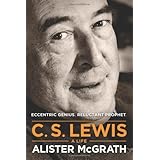
Product DetailsAlister McGrath’s fascinating biography, C.S. Lewis: A Life – Eccentric Genius, Reluctant Prophet, explores the forces that shaped Lewis’ life and work.  McGrath describes the timeline of events that led to his subject’s conversion.  One part of the story that captured my attention was how on the day he came to recognize the divinity of Christ, Lewis himself noted being especially captivated by a field of blue flowers.


“Lewis’s heightened attention to the bluebells may well reflect their symbolic association with this moment of insight – after all, Lewis tells us that he had long been a self-confessed ‘votary of the Blue Flower.’  The ‘Blue Flower’ motif in German Romanticism has complex historical roots.  It was first stated in Novalis’s posthumously published fragment of a novel Heinrich von Ofterdingen (1802), and came to symbolize a longing for the elusive reconciliation of reason and imagination, the observed world outside the mind and the subjective world within.  The bright blue European cornflower is often cited as an inspiration for this symbol.  It is easily extended to bluebells.” (p. 154)

Before his conversion to Christianity, Lewis had struggled to reconcile the two halves of his mind.  But in finding Christ, his “Blue Flower,” he finally found a way to hold both reason and imagination together.

In most Christian circles there is serious pressure to hold to a ‘blue ribbon’ faith – one that lines up sufficiently to accepted creeds and statements of faith.  Now while there is certainly a place for teaching orthodoxy, what if instead of focusing our energies on striving after that ‘blue ribbon’, confirming that the faith has the stamp of approval, we were focused on becoming ‘votaries of the Blue Flower?”  What if our way of discipling people was truly holistic as we helped others take up an ‘owned’ faith that was fully alive in both halves of the mind?  Could we begin to think of a truly ‘blue ribbon’ faith as the kind that points towards the one found in the Blue Flower – one that fully uses reason and imagination? 

Lewis was an avid walker and he spent many afternoons hiking around the English countryside.  Lewis’ faith had legs, too, and he models for us a way of believing that used both legs.  He used both the leg of reason and the leg of imagination to allow him to travel deep into the country of His King.  So many followers of Christ, though, are unable to venture that far from home.  They stumble and hop on their preferred leg of either reason or imagination.  

Lewis produced well-reasoned accounts of faith that have stood the test of time like Mere Christianity and The Problem of Pain. He also gave us more imaginative works, like the Narnia series and The Great Divorce. Both kinds have shaped the minds of countless people.

So, to use another image, we could think of reason and imagination like the two blades that form a pair of scissors.  If only one side is sharp, the scissors are rendered powerless.  Lacking a healthy pair of blades the disciple is unable to cut through the cords that keep him or her in bondage.

When I think about the kind of faith that I want to pass on to the people around me, my hope is that they’ll find more than just the ‘blue ribbon’ of orthodoxy.  I want to give expression to a faith that engages both sides of the mind and develops capacities for reason and imagination.

May God help us make fully-formed disciples, fellow devotees of the ‘Blue Flower.’

Grace and Peace,
Alan

Wednesday, January 22, 2014

Why church plants won't grow


“People come by my house all the time interested in the Scriptures and asking questions about the church…” my friend said, shaking his head. “So, why aren't we growing?”

Caunia lives in the village of Nkunama where we helped plant a church 5 or 6 years ago.  His family has really caught the vision of what the Kingdom is all about and they are a force for good to those around them.  But, even though my friend and his wife have experienced life transformation because of the gospel, their immediate family makes up most of the church.

My friend had come into town to spend the night at our house before attending a church leadership meeting the next day.  And we spent most of that Saturday sitting under our thatched alependre talking about our families, the weather and mostly… the church.  We continued a discussion we’d been having over the last couple years about how to help them grow. 


During these conversations, I laid out for him what I understand to be the four main reasons that church plants stagnate.  Now I don’t know if these are the main barriers in all cultures.  I’ve just seen that here in our part of Africa, it is usually one or more of these factors that keep young communities of faith from growing.

1.      A sin problem – Weeds in the soil will choke out the church plant and keep it from developing.  Oh how I wish I had difficulties coming up with examples for this…  There’s Mwanya in Namwaciko whose drunkenness destroyed the church in that village.  There’s Albisto and the way that his infidelity is keeping the promise of church growth in Ncororo at bay.  As seen in the famous story of Achan, sin has disastrous consequences for the community of God (Joshua 7).

2.      A vision problem – Some churches lack a passion for sharing good news with their neighbors.  Like wet firewood, their potential for growth is trapped inside and difficult to light.  The church in Nekwaia has had seasons of stability where they seem primed for expansion, but unfortunately they have often focused on other things.  A church without a vision to grow, will not grow.

3.      A lack of good leadership – Other communities of faith are stagnant for lack of a leader that they can rally around.  The church in Cambir has a solid group of people, but they lack a healthy leader.  Finding a good leader is probably the most difficult part of church planting.   It can be easy to confuse maturity or capacity with leadership skill – and that mistake will severely limit the church’s potential.  Aubrey Malphurs warns us not to “fall prey to the M-myth… Simply stated, the M-myth is the belief that certain kinds of believers… the mature, the mobilized, and the ministry masters” will necessarily be leaders.  Malphurs goes onto say that, “Nothing will repel other leaders more than a nonleader in a leadership role.  Therefore, if the church believes the M-myth, construction of their leadership-development process will never begin.”  (Building Leaders, p. 173)

4.      A difficult context – Some churches potential for growth is limited by the rocky soil they find themselves in.  I tried to encourage Caunia that I think this is his church’s main challenge. Muslim leaders in his village have been particularly hostile and the church has faced a number of barriers.  So, we talked about how the best response in their case is patience and prayer, trusting that the God who created that soil will till it, as well. 

May God help us truly see the state of church plants and help them reach their potential in Christ!

Grace and Peace,
Alan

Sunday, January 12, 2014

Learning from the Great Raconteur


I can still remember the fascination I experienced the first time I heard the word ‘raconteur’.  The way it was pronounced made it sound to me like the man in question was being called some kind of dark-rimmed-eyed mammal who’d decided to take his show on the road!

(insert groan here)

In reality, though, the word raconteur refers to “a person who tells anecdotes in a skillful and amusing way – from the French: relate, recount.”  In popular culture this term is used to describe someone who is the life of the party, a person who can hold the attention of the room and name drop with the best of them as he or she beguiles hearers with interesting tales. 

Harvey Cox said this: “There has never been a better raconteur than Jesus of Nazareth.”

While the titles of ‘Lord’, ‘Son of God’ and ‘Messiah’ are the ones most often associated to Jesus, I also like thinking of him as the Master Raconteur.  In the gospels, Christ is the life of the party.  On every page we find him spinning parables and stories that captivated the minds of both sinners and saints. 

My hunch is that Jesus probably told and retold those same anecdotes over and over again.  He told them so often that when the time was right, his disciples had little problems getting them down on parchment.  Jesus used those parables not simply to entertain, but in order to point his hearers towards what life in the Kingdom of God would look like.  The Master Raconteur, he knew his audience and knew when to use each anecdote for maximum effect.  And that small group of men and women who followed him around day after day got a steady dose of life-giving and worldview changing ideas.


It would be safe to say that there is really just one main model for preachers or pastors in churches today.  These ministers address the same group of people over and over again, week after week.  It hasn’t always been this way, though.  Not that many years ago, itinerant preachers would travel crisscross the country on horseback.  One Sunday they would sermonize to one congregation and the next they would be in another small church.  These preachers would often give the same homily multiple times before starting the cycle over again.

Our ministry here in Mozambique looks more like those itinerant ministers.  We work with about 50 churches all over the province of Cabo Delgado.  Our family is responsible for visiting about a third of them.  So, I will often preach the same sermon for weeks at a time before switching to a different message.  In working with growing disciples, Rachel and I will use the same set of studies over and over again.  In counseling people one-on-one, I’ll pull out an example from my bag of parables and apply it to that situation. Much of our ministry is teaching and storytelling and so we use the same stories over and over again.  This itinerant ministry allows us to get a lot of mileage out of our repertoire of stock stories.

It has been extremely helpful to carry around my bag of stock parables to use in different situations.  And while in developing one’s own bag of rhetorical tricks, it is certainly good to create and field test the stories, I have… ahem… borrowed… ahem… many of them from others and adopted them for myself.  Certainly biblical stories and allusions to the text are essential, but the people we are working with are part of a culture that is predominately illiterate and biblically illiterate.  So, to meaningfully connect with them, I need to tell stories and make connections to what they are familiar with.

Here are some samples of stock parables/stories that I, as an Apprentice Itinerant Raconteur, consistently use: 

Be a funnel not a cup – A cup can only receive so much, while a funnel can be continually filled.  This is great for reminding disciples that they must pass on what they are learning to others or they shouldn’t rightfully expect to learn anything more.

The dangers of being a spider – Some church leaders like to control everything.  They sit like a spider in the middle of their web and if they sense movement of any kind, they’ll run over to take charge of that.  This image is great for encouraging people to remember that it is healthy to relinquish control… I mean, nobody wants to be a spider!

Xima and matapa – Meals in this part of Mozambique are typically made up of 1. xima (corn or cassava made into a loaf that looks like a big heap of mashed potatoes) and 2. matapa (greens, beans, or meat to accompany it).  Our friends would think it bizarre to eat either of these things by themselves – they must be eaten together.  So, whenever I am talking about two things that need to go together, like for example, baptism and repentance, I will say that they are like xima and matapa – you can’t have one without the other.

Lonely charcoal won’t work – In many of the villages that we work men make charcoal to sell in the city.  Everyone knows that one piece of charcoal alone will not get hot.  It is easy for our friends to see that humans also need to be around others of a similar mind if they have any chance of getting a fire started.

The papaya vs. the mango – Papaya trees grow tall and begin producing fruit very quickly, but they won’t last long.  When the papaya tree dies, the tree’s wood is soft and squishy – not good for burning.  Mango trees, on the other hand, take a long time to mature but will end up blessing a community for years to come.  As we work with young churches, we often remind them that slow growth is usually the kind that yields long term stability.

Wear your helmet! – Here in Montepuez it’s common to see a person driving a motorcycle with a helmet strapped to the back of the seat.  Because of the heat, traffic cops don’t usually enforce the law about people wearing the helmet.  As long as riders have the helmet with them, that is usually good enough to avoid a fine.  But, if the person is in an accident, having the helmet tied behind them won’t do any good.  This image is a good reminder that it isn’t enough to just know what is good and true, we have to also actually wear it/do it.
Stories like these can help key ideas stick in people’s minds.  They feed imagination and imagination is the motor providing motivation for moving forward.  These linking stories function like rhetorical plumbing.  They are the pipes and spigots that keep concepts flowing to soften the soil where the Word can be received.

I know that I have a long way to go to come close to approaching the same level of storyteller and itinerant raconteur as Jesus, but I hope my attempts at imitating him will bear more and more fruit.

At church this morning, Armindo, a young man I’ve been discipling for the past few years preached the sermon.  He shamelessly ‘borrowed’ one of ‘my’ stock parables.  Did he cite me as his source?  No.  Did it bother me?  Not a bit.  Because that is a hint, a small piece of evidence that these subversive stories are wriggling into the hearts and minds of our Makua-Metto friends.

May God grace us to become better Kingdom Storytellers as we learn to imitate the Master Raconteur.

Grace and Peace,
Alan

Thursday, January 2, 2014

Memorization and Maturation

I recently wrote an article for the Evangelical Missions Quarterly on the role that scripture memorization can play in the process of maturing Christian leaders.  I'll paste a short snippet from the piece below.  
"Our small group settled into the shade of the acacia trees in front of my house. It was a day of celebration: the eleven of us had spent the last few months memorizing the book of Titus together and this was the final session. Going around the circle, some of the men were able to quote Titus almost flawlessly, while others struggled making it through even that day’s passage.  Members of the group had memorized Paul’s epistle in three different languages (Portuguese, Swahili, and Makua-Metto), using a total of five different translations.

After celebrating our accomplishment with heaping plates of goat meat curry, potatoes, and rice, each person took a turn sharing which verses were the most significant to him. Some felt challenged by Paul’s exhortation to teach, others saw strong similarities between their own local setting and the morally corrupt atmosphere of Crete, while another expressed admiration for the way Paul addressed his apprentice: unabashedly exhorting and instructing Titus while at the same time tenderly expressing his love for the young man. 
From the time of Moses, God has challenged his people to keep his commandments upon their hearts. This tradition carried on into the time of Christ.  From our knowledge of Jewish culture and in studying Jesus’ own teaching and preaching, it is clear that our Rabbi had large portions of scripture committed to memory.  He used scripture to rebuke Satan while being tested in the wilderness, and the Psalms were some of the last words he spoke before finishing his work on the cross. 

While memorization of scripture has been an expectation of followers of Jesus for most of church history, the West has seen a serious decline in its use and appreciation in the last few decades..."
If you're interested in reading more, and have a subscription to EMQ :) , you can read the rest of the article here.

Grace and Peace,
Alan

Friday, December 20, 2013

a Christmas story for the rich and poor

Lately, I've had the privilege of teaching our mission team kids' weekly Bible class and we've read through The Story, looking at the major events in Scripture to help them get the big picture of the biblical narrative.  These kids are enthusiastic and so smart - they often have their hands raised to answer questions even before they've finished coming out of my mouth!  But, one question I asked had them stumped.

We read the story of the birth of Jesus and then I got them to imagine the places they thought kings should be born.  They decided that royalty should begin their lives in palaces or castles or maybe nice hospitals with all the latest technologies.

So, why then, I asked, was the Son of God born in a barn?

Silence.  Puzzled faces.

Jesus has many titles - Lord, Savior, Christ, Messiah, Prince of Peace to name just a few.  But, that day we talked about what has to be my favorite title for Jesus - Immanuel.  He is 'God with us'.  I love the way that John 1:14 is rendered in the Message: "The Word became flesh and blood, and moved into the neighborhood."


From the very beginning of his life we see that he isn't like other kings.  He willingly took his first nap in a manger because no one could find him a room.  He truly identifies with us - even in poverty and rejection.

He was born in a barn because as Ben Witherington says, God especially loves the last, the least and the lost.

What is fascinating to me is how the birth of our King is portrayed in the different gospels.  In Luke's gospel, where Jesus is consistently on the side of the poor, the first people to hear the announcement of his birth are lowly shepherds (2:8-20).  Instead of taking the good news of the royal birth to rich and powerful, the angels go straight to a group of men whose word wouldn't be accepted in a court of law.  That would be like choosing to make a PR announcement to people sleeping under a bridge instead of getting the word out on CNN.  So, the shepherds are the first ones informed and they are intrusted with spreading the news.  The rich and wise men (the Magi), though, aren't even mentioned in Luke's account.

But, in Matthew's gospel where Jesus is presented as a sage and a prophet, the birth narrative skips over stories of smelly shepherds and tells us only of wise and wealthy men, visitors from the East, who come to pay their respects to the baby King (2:1-12).  Their journey is certainly not easy though, they experience difficulties and danger.  Although they are able to meet with rulers on their way in, they have to head back home in secret.

What strikes me is that the New Testament contains two versions of the Christmas story.  One about the rich and one about the poor.

What holds these tales together, though, are these three things:

1. God is with us and humbly chose to move into our neighborhood.

2. God is on the lookout for people humble enough, whether rich or poor, to hear his invitation.  So the church that truly reflects the nativity, as Don McLaughlin puts it, will include all kinds of people from all socioeconomic and racial backgrounds.

3. And God especially loves the last, the least and the lost - which, whether we are rich or poor, ultimately describes us all.

So, Merry Christmas to ALL!

Grace and Peace,
Alan

Monday, December 16, 2013

after the break-in

On December 1st, armed thieves broke into our home, stealing money and our computers.  We are extremely grateful that no one was seriously injured or killed.  Our family and our team is committed to staying and working among the Makua-Metto people of Mozambique, and we have been blessed by an outpouring of love and support from friends and family all over the world.  Rachel and I are trying to be realistic about how we are doing and recognize that we are still in the middle of processing this traumatic event.  Many people have asked how we are doing and it has been hard to give a complete answer. 

We’ve been flooded with visitors. In the first few days after the incident we had at least a hundred Mozambicans come to visit and cry with us. They’ve called this kind of visit ‘okituwela’ which is the word to describe the visits you make when someone is mourning a death. They’ve come to grieve and encourage us. One of the Mozambican preachers was here within a few hours and cried with his hand on my shoulder as he prayed for us. At least 10 men came on Sunday from the Evangelical Assembly of God to pray for us and bring about 10 U.S. dollars to help with our losses. Others brought flour and peanuts and bajias (small balls made of fried bean paste) for the girls. A man that barely knows us sent over bread, jam and a jar of mayonnaise. Women sit and cry with Rachel. One man walked barefoot from a nearby town and started crying as soon as he saw me. Two other men rode their bikes from another town to check on us after hearing about it over the phone – “It wasn’t enough to just hear that you were okay, we had to see you with our eyes because the whole village is crying for you and we needed to be able to tell them that we saw you alive.” I have talked often with one of the Mozambican church members about the need to be ‘strong and courageous’ and I received that reminder in a text message from him as I drove to the police station Sunday morning. People have sat with us and told us their own stories of suffering and tales of God’s faithfulness in the midst of pain. One man who has been a follower of Jesus for just a couple years, rode his bike from another town to deliver a gigantic bag of flour and shared a testimony of Christ’s provision in hardship to me and the others present.


All these visitors have reminded me that we are really doing ministry ‘among’ or ‘with’ the Makua people. It is not just us doing ministry ‘to’ them. They are ministering to us as well and that is how it should be.

Rachel and I are still feeling a bit shaken.  This past week we resumed a more normal schedule but we still are feeling the effects.  We’ve both felt like it has been harder to hear and speak Makua.  It’s like our brains are moving slow, I’ve felt like we’re swimming in molasses and been harder to make normal decisions as quickly.

We are determined that God can be glorified even in this.  Our God has this amazing habit of turning bad things into something good.  He took 400 years of slavery in Egypt and turned it into a miraculous exodus for the Hebrews.  He took the betrayal and death of Jesus and turned it into salvation for the world.  So, we are resolved that this same God can surely redeem our recent experience – He can take it and use it for good.

Right now we are requesting prayers for healing of our hearts and minds.  We need prayers for peace and wisdom for our whole team, especially the teachers, Kara and Bekah, who have been affected by this event as well.

Thanks to so many who have been praying for us and carrying us through this experience.

Grace and Peace,
Alan

Tuesday, November 19, 2013

to build a bridge


I parked the truck under a tall tree and the three of us walked down to the river.  As we neared the edge of the water, we paused as two men pushed a motorcycle across a temporary ‘bridge’ made of branches and logs.  The bridge made from a fallen tree that I’ve used to cross the river in the past had been washed away, so this was the only way to get to the other side.  Amissi, Selso and I greeted the men and then crossed over ourselves.

It’s nearing the end of the dry season, so while the log bridge we used works fine for now, in just a few weeks it will be gone.  The Montepuez River will soon be filled by runoff from northern Mozambique’s seasonal rains; so while these days the river doesn’t seem very imposing, once the rains begin it will become a dangerous, rushing monster.

Amissi (a church leader that lives here in the city), Selso (a young man that Amissi is discipling) and I talked as we walked the dirt path from the river to the village of Ncomekah.  We greeted the men, women and children who passed us on their way to cross the river themselves.  After walking for about half an hour, we arrived at Rajabu’s house. 

Rajabu is a man who my teammate Jeremy Smith has been discipling for the past few years.  He and his wife recently moved to the village of Ncomekah to be near Rajabu’s mother-in-law.  Rajabu and his wife want to start a church in that village.  We sat around after worship eating mangoes and Amissi made plans to come by bicycle and visit them again in a few weeks.  Rajabu was excited to have some promised help in beginning that church.  But he noted that while those plans will work fine for the month of December, by January or February the river will be impassable.

Rajabu accompanied us on our walk back to the truck and as we walked along I thought about the meetings that have taken place over the past few months about the lack of a bridge over the Montepuez River.  I thought back to our first meeting with the community leaders back in June – I was sitting under a thatch roof with Armindo Eusebio (a young man I am discipling) and Will Zweig (a Peace Corps worker teaching Science at the local High School).  The bridge was Will’s idea.  He had approached me a few weeks earlier, asking about places in our district that most needed a pedestrian bridge.  So, there we were sitting on bamboo chairs listening to a group of men from the villages of Bandar, Cambir and Ncomekah.  These villages would benefit the most directly from a bridge and one by one they stood up and told tales of family members being killed or maimed by crocodiles, friends who drowned trying to swim across the rushing waters, and others who lost food or their own bicycles to the river.  As I translated the stories from their Makua-Metto into English, Will’s eyes widened.   
This was the place to build a bridge.    

The Montepuez district is in the middle of the poorest Province (Cabo Delgado) in what the United Nations Development Program considers to be the third poorest country in the world.  And Mozambique’s lack of infrastructure is most costly to subsistence farmers who live in outlying villages.  During the rainy season, these villagers have only three options: risk crossing the river by swimming, pay nearly half a day’s wage to have themselves and their goods paddled across on unstable canoes, or travel miles and miles out of their way to reach the nearest bridge.

At that meeting with the village leaders back in June, we discussed the possibility of a safer, cheaper and faster option for the people: building a 35 meter-long pedestrian footbridge outside of the village of Bandar.  I’ve been glad to play a small part in assisting the US Peace Corps in partnering with the Prometto Association, the Montepuez District government, Bridges to Prosperity and a Bridge Commission made up of leaders from these three villages to build a bridge that would directly benefit at least 10,000 Mozambicans.  The estimated budget for the construction of the bridge is $20,000 and there is a 40% financial commitment that has already been promised.  So, what we need now is the remaining 60% (about $12,000) in order to completely fund the project.
 
We are in the process of writing grants and making this need known to people who may be interested in contributing to this project.  If you are interested in making a donation, send me a message through our team website here and I will give you more details about how to help.

Please keep this project in your prayers – it will be an amazing blessing to our friends here in Montepuez!

Grace and Peace,
Alan

Friday, November 15, 2013

Mangoes and the nature of God


One of the best parts about living in our part of Africa is this: MANGOES.

All the fresh mangoes you can eat! 


Growing up in the United States, for me, mangoes were these exotic, luxury fruits that sat on special display in the local grocery store.  They were expensive - having journeyed a great distance to make it from the field to our produce section.


For Westerners, mangoes are special treats.


For our Mozambican friends, though, oftentimes mangoes are the only thing standing between them and severe hunger.  I know that may sound dramatic, but mangoes serve as a ‘stop gap,’ helping people make it to next year’s harvest.  So, while a stomach full of mangoes is not the most nutritious thing in the world, it does provide enough energy to keep going. 


For the past few weeks, the temperature has been steadily climbing and the mango tree in our backyard has sent larger and larger cascades of fruit crashing down on our tin roof.  Each afternoon, friends drop by asking if they can collect mangoes from our yard.  Most people here in Cabo Delgado have spent the last few weeks working in their farms and getting the soil ready for planting.  The harvest won’t begin coming in until a few months from now.  Everyone around here knows that we’ve officially entered the time of hunger. 


Aaron Roland, a former colleague of ours here in Montepuez, used to talk about how God’s character is evident in the mango tree.  He would say that God knows that November and December are tough months and has provided an abundance of food freely available to help get everyone through it.   


 Our God is like a mango tree in the way that he is generously providing for his children in their needs at their hardest times.   


Earlier this week, I was with a group of church leaders who posed this question:  “Is God a man or a woman?”


I responded by saying that sometimes in scripture God is portrayed using masculine metaphors and sometimes feminine metaphors.  God, for example, is called our Father (Matthew 6:9); our King (Psalm 47:7); and pictured as a shepherd who looks for his lost sheep (Luke 15:1-7).  But on the other hand the Bible has beautiful feminine imagery portraying God as a mother who can’t forget the children she nursed (Isaiah 49:14-15); a woman in childbirth (Isaiah 42:14); a midwife (Psalm 71:6); a hen sheltering her baby chicks (Psalm 91:4); a mother eagle protecting her offspring (Deut. 32:11); a female bear protecting her cubs (Hosea 13:8); a woman working leaven into the dough (Luke 13:18-21); and a woman seeking a lost coin (Luke 15:8-10).


So, the Bible is rich with masculine and feminine imagery for God.  But, it's important to remember that God is way beyond what we can imagine. 

God has no gender – God is God.


I then took a deep breath and gave them this example.


My daughters probably couldn’t give an abstract description of who I am.  It would be impossible for them to give one that is complete.  They see me leave the house before they go to school in the morning and then welcome me back home in the afternoon from spending time in a village.  They see me teaching and preaching in languages that they don’t understand.  They know that Rachel and I had a life before they came into existence, though it is hard for them to imagine (actually, it’s hard for me to imagine as well!)


But if you asked them to describe who I am in relation to them… well, that’s a different story.  Katie would have no trouble rattling off a list of books that she likes me to read to her before bedtime.  She would talk about how I pick her up when she’s scared of the dog and there’s a good chance she’ll mention me making her favorite pancakes for breakfast last week.


When the Israelites described God they didn’t use abstract words like omnipotent and omnipresent or impassable.  Instead, they told the stories of the way God worked with them in history.  They told of how God was the One who called and cared for Abraham, Isaac and Jacob.  They testified to the way I-AM-WHO-I-AM dramatically rescued them from bondage in Egypt. Then in the New Testament, Paul refers to God by way of his powerful action in sending the Son - "the God and Father of our Lord Jesus Christ" (Rom. 15:6).


There is no way that we humans can understand the nature of God.  God is far beyond our understanding (we haven't even touched on the idea of the trinity!).  The only thing we can do is to describe the way that God has related to us.  That’s why the Bible is such a gift.  We get these beautiful and painful tales of a great God who goes to great lengths to save us. 


One of my favorite Biblical scholars, Ben Witherington, says this:

“In the New Testament, there are only three nouns used of God.  God is love.  God is life.  And God is light… the three ‘L’s.  Everything else is an adjective.  God is righteous (adjective).  God is holy (adjective).  God is sovereign (adjective)… I mean, we could keep going down that road.   But it’s got to be significant that when we are talking about God and using another noun… it’s love, life and light.”

The Bible uses a variety of titles and metaphors to describe God.  But, until the Lord is fully revealed to us, we humans will continue to fail to wrap our minds around the nature of God.  In the midst of our failings, though, those times that we come the closest to understanding our Creator are when we name the ways that God has been active in our world, loving us so fully and bringing us great and sustaining gifts such as life, light… and mangoes!  


Grace and Peace,

Alan